Stress and Your Heart: Best Cardiology Hospital in Vijayawada
Deadlines at work, rising household expenses, long commutes through busy city traffic, family responsibilities and sleepless nights. For many people in Vijayawada, stress has become a daily companion. Most of us treat it as an unavoidable part of modern life and carry on.
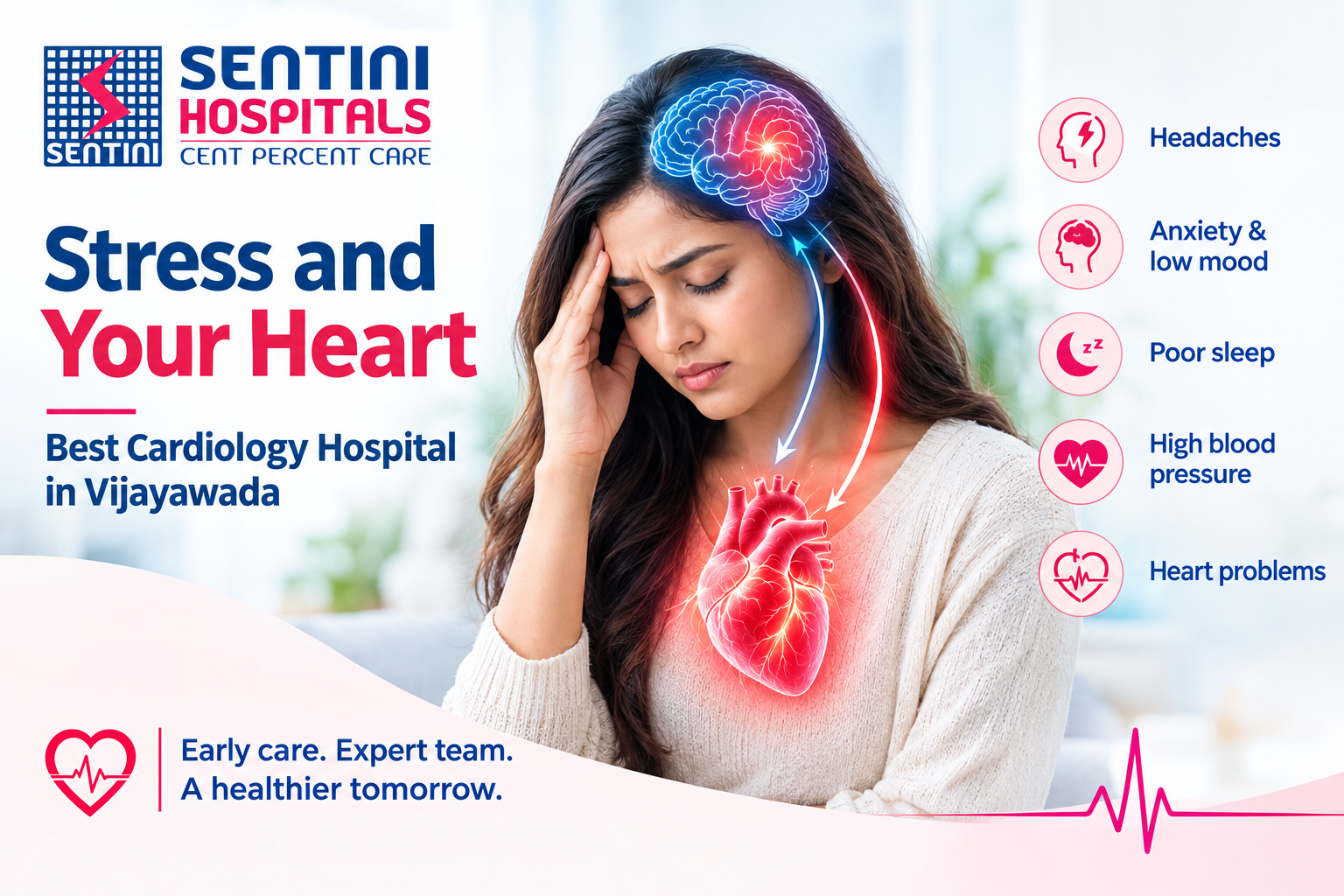
But stress does not stay in your mind. It travels through your body, and two of the organs it affects most are your brain and your heart. Over time, constant pressure can bring on headaches, poor sleep, anxiety, high blood pressure and even serious heart problems.
The good news is that stress-related damage can often be prevented or reduced when it is understood early. In this guide, we explain how stress affects your head and heart, which warning signs to watch for, and how to protect yourself. We also explain how to choose the best cardiology hospital in Vijayawada when you need expert help.
What Is Stress and How Does the Body React?
Stress is your body's natural response to any demand or threat. A short burst of stress can be useful. It sharpens your focus before an exam or helps you react quickly in an emergency.
The trouble begins when stress becomes constant. This is called chronic stress, and it keeps your body in a state of high alert for weeks, months or even years.
The Fight-or-Flight Response
When your brain senses danger, it signals the adrenal glands to release two hormones:
- Adrenaline: raises your heart rate, increases blood pressure and gives you a quick burst of energy.
- Cortisol: the main stress hormone. It increases blood sugar and prepares your body to handle the threat.
This system was designed for short-term emergencies, such as running away from a predator. Today, the "threat" is often an unpaid bill or an angry boss, and it never really goes away. As a result, your stress hormones remain high, and your body never gets a chance to relax and repair itself.
How Stress Affects Your Head
Your brain is the control centre of the stress response, and it is also the first organ to feel the strain. Long-term stress can change how you think, feel and sleep.
Common Effects of Stress on the Brain
- Frequent headaches: Tension headaches often feel like a tight band around the forehead. Stress can also trigger or worsen migraines.
- Anxiety and constant worry: You may feel restless, on edge or unable to switch off your thoughts.
- Low mood and depression: Persistent stress is closely linked with sadness, loss of interest and emotional exhaustion.
- Memory problems: High cortisol levels over a long period can make it harder to learn new things and recall information.
- Poor concentration and brain fog: Many people describe a "cloudy" feeling, where simple tasks seem difficult.
- Sleep disorders: Trouble falling asleep, waking up at night or sleeping without feeling rested are all common.
Understanding the effects of stress on the brain is important because mental symptoms are often ignored or brushed aside as weakness. They are not. Trusted health bodies such as the National Institute of Mental Health explain this well, and you can read their guidance on how stress affects mental and physical health to learn more.
If stress is affecting your mood, sleep or daily routine, please do not wait for it to get worse. Talking to a doctor or counsellor early can make a big difference.
How Stress Affects Your Heart
Your heart works closely with your brain. Whenever your brain sounds the stress alarm, your heart responds immediately. When this happens again and again, the heart and blood vessels pay the price.
How Chronic Stress Can Harm the Heart
- High blood pressure: Stress hormones narrow your blood vessels and make your heart pump harder. Over time, this can lead to sustained hypertension, a leading risk factor for heart disease and stroke.
- Increased heart rate: A constantly racing heart puts extra strain on the heart muscle.
- Inflammation: Long-term stress can trigger low-grade inflammation in the body, which may damage the inner walls of arteries and contribute to blockages.
- Irregular heartbeat (arrhythmia): Stress can disturb the heart's electrical rhythm, causing palpitations or a fluttering sensation in the chest.
- Higher heart attack risk: Stress may raise the risk of a heart attack, especially when combined with other factors such as smoking, diabetes or high cholesterol.
- Stress cardiomyopathy: Also known as "broken heart syndrome," this is a temporary weakening of the heart muscle that can follow intense emotional shock, such as the loss of a loved one. It can feel just like a heart attack and needs urgent medical attention.
The relationship between stress and heart disease is well recognised by cardiology experts worldwide. The American Heart Association offers practical advice on managing stress for a healthier heart, which is worth reading.
Stress also affects the heart indirectly. Many people cope with stress by eating unhealthy food, smoking, drinking too much tea or coffee, or skipping exercise. These habits quietly add to stress-related heart problems over the years.
The Link Between Head and Heart
The head and the heart are not separate systems. They are in constant two-way communication through nerves, hormones and the bloodstream.
From the head to the heart: Anxiety, anger and depression increase stress hormones, which raise blood pressure and heart rate. People with long-term mental stress are more likely to develop heart problems.
From the heart to the head: Living with a heart condition can itself cause fear, worry and low mood. A person who has had a heart attack, for example, may feel anxious about every little chest sensation.
This creates a cycle. Stress harms the heart, heart problems create more stress, and the cycle continues. That is why good care must look at both the mind and the body.
The same understanding applies to the brain. Poor blood flow caused by high blood pressure and clogged arteries can also increase the risk of stroke and affect memory over time. This is why heart care and brain care go hand in hand. At Sentini Hospitals, the Institute of Neuroscience works alongside cardiology, helping patients understand how brain and heart health are connected.
Warning Signs You Should Never Ignore
Many people delay seeking help because they assume their symptoms are "just stress." While stress can cause real physical symptoms, some signs may point to a heart problem and should always be checked.
Please seek medical help if you notice:
- Chest pain or discomfort: pressure, tightness, heaviness or burning in the centre of the chest
- Pain spreading to the left arm, jaw, neck, back or shoulder
- Palpitations: a racing, pounding or skipping heartbeat
- Breathlessness: difficulty breathing during light activity or even at rest
- Dizziness or fainting: feeling light-headed or suddenly weak
- Unusual sweating, especially cold sweat with nausea
- Persistent fatigue: constant tiredness that does not improve with rest
Important: If you experience sudden chest pain, severe breathlessness or fainting, do not wait. Go to the nearest emergency department immediately or call an ambulance. Every minute matters during a heart attack.
Lifestyle Habits That Make Stress Worse
Some everyday habits can make stress harder to handle and put extra load on your heart. Being aware of them is the first step toward change.
- Smoking: Many people smoke to "relax," but nicotine raises heart rate and blood pressure and damages blood vessels.
- Poor diet: Fried food, sugary snacks and heavy, salty meals increase cholesterol and blood pressure. Skipping meals can also worsen mood and energy.
- Lack of sleep: Sleeping fewer than six to seven hours regularly raises stress hormones and strains the heart.
- Sedentary routine: Sitting for long hours at a desk or in front of a screen reduces circulation and fitness.
- Excess caffeine: Too many cups of coffee, tea or energy drinks can worsen anxiety, disturb sleep and trigger palpitations.
- Alcohol: It may feel calming for a while, but it can raise blood pressure and disturb sleep and heart rhythm.
Practical Ways to Manage Stress and Protect Your Heart
You cannot remove all stress from life, but you can change how your body handles it. These simple heart health tips can help.
1. Move Your Body Daily
Aim for at least 30 minutes of moderate activity such as brisk walking, cycling or swimming on most days. Exercise lowers stress hormones, improves mood and strengthens the heart.
2. Practise Yoga and Meditation
Yoga, pranayama and mindfulness meditation calm the nervous system. Even 10 minutes of slow, deep breathing each day can reduce tension and help lower blood pressure.
3. Eat a Balanced, Heart-Friendly Diet
Include plenty of vegetables, fruits, whole grains, pulses, nuts and lean protein. Reduce salt, sugar and deep-fried foods. Drink enough water through the day.
4. Protect Your Sleep
- Go to bed and wake up at the same time daily.
- Avoid phones and screens at least 30 minutes before bed.
- Keep your bedroom dark, cool and quiet.
- Avoid tea, coffee and heavy meals late in the evening.
5. Stay Socially Connected
Talking to family and friends is one of the best natural stress relievers. Do not carry worries alone. Sharing them often makes them lighter.
6. Manage Your Time Better
Break big tasks into smaller steps, set realistic goals, take short breaks and learn to say "no" when your plate is full.
7. Seek Professional Support
If stress feels overwhelming, speaking to a doctor, counsellor or psychologist is a sign of strength, not weakness.
When to See a Cardiologist
Many heart conditions develop silently. You may feel fine while blood pressure, cholesterol or blockages are slowly building up. That is why regular check-ups matter, especially if you are under constant stress.
You should consider consulting a cardiologist in Vijayawada if:
- You are over 30 and have never had a heart check-up
- You have a family history of heart disease, diabetes or high blood pressure
- You have high blood pressure, high cholesterol or diabetes
- You smoke or have smoked in the past
- You experience chest discomfort, palpitations, breathlessness or unexplained fatigue
- You are under long-term stress and notice physical symptoms
Common Heart Tests Your Doctor May Suggest
- ECG (electrocardiogram): records the heart's electrical activity
- Echocardiogram (Echo): an ultrasound scan that shows how well the heart pumps
- Treadmill or stress test: checks how your heart responds to physical effort
- Blood tests: measure cholesterol, sugar and other heart-related markers
- CT angiography: gives detailed images of the heart's blood vessels
Your cardiologist will decide which tests are right for you based on your symptoms and history.
Why Choose the Best Cardiology Hospital in Vijayawada
When it comes to your heart, you want a hospital that offers expertise, advanced technology and a caring approach in one place. Here is what to look for in the best cardiology hospital in Vijayawada:
- Experienced cardiologists: Specialists, including interventional cardiologists, who can diagnose and treat a wide range of heart conditions.
- Advanced diagnostics: Access to modern tests such as ECG, echocardiography and CT angiography under one roof.
- 24/7 emergency and critical care: Heart emergencies do not wait, so round-the-clock care and ambulance support are essential.
- Patient-centric approach: Clear explanations, personalised treatment plans and compassionate support for you and your family.
- Integrated care: Coordination between cardiology, neurology, pulmonology and critical care for patients with complex needs.
At Sentini Hospitals, a 150-bed multi-specialty facility in Vijayawada, patients can access experienced interventional cardiologists, advanced diagnostics, emergency services and a caring medical team. You can explore the full range of cardiology services at Sentini Hospitals, from preventive heart check-ups to specialised treatment.
Choosing the right heart specialist in Vijayawada early can help you detect problems sooner, start treatment on time and live with greater confidence.
Frequently Asked Questions (FAQs)
1. Can stress really cause a heart attack?
Stress alone is rarely the only cause, but chronic stress can raise blood pressure, increase inflammation and encourage unhealthy habits. Combined with other risk factors, it can increase the chances of a heart attack.
2. How do I know if my chest pain is from stress or my heart?
It can be hard to tell. Stress-related chest tightness and heart-related pain can feel similar. If you have chest pain, especially with sweating, breathlessness or pain in the arm or jaw, seek medical help immediately rather than guessing.
3. What are the common chronic stress symptoms?
These include headaches, poor sleep, irritability, anxiety, low mood, muscle tension, fatigue, difficulty concentrating, digestive problems and a racing heartbeat.
4. How often should I get a heart check-up?
Adults over 30, and anyone with risk factors such as diabetes, high blood pressure or a family history of heart disease, should discuss a regular schedule with their doctor. Many people benefit from a yearly check-up.
5. Can lifestyle changes reduce stress-related heart problems?
Yes. Regular exercise, a balanced diet, good sleep, quitting smoking and relaxation practices such as yoga and meditation can significantly lower your risk. Medical guidance is important if you already have a heart condition.
Conclusion: Listen to Your Mind, Protect Your Heart
Stress is not just "in your head." It affects your brain, your mood, your sleep and your heart. The longer it goes unmanaged, the greater the risk to your overall health.
The most important step is to act early. Make small changes in your daily routine, pay attention to warning signs and never ignore symptoms such as chest pain, palpitations or breathlessness.
If you are worried about your heart health, the team at the best cardiology hospital in Vijayawada is here to help. Do not wait for symptoms to become serious. Book your cardiology consultation at Sentini Hospitals today, or call +91 9010726666 to speak with our team.
Your heart works for you every second of your life. Take care of it, starting today.
Disclaimer: This blog is for awareness and educational purposes only. It is not a substitute for professional medical advice, diagnosis or treatment. Always consult a qualified doctor for any health concerns.