Snakebite First Aid After Floods: A Guide for Amaravati Families
After heavy rain, water fills the fields, canals and low-lying lanes around Amaravati, and snakes move to dry ground. They often end up in places people use every day: bunds between paddy fields, firewood stacks, cattle sheds, courtyards and even inside homes. Knowing snakebite first aid before you need it can make a real difference in the minutes after a bite.
Quick answer: If someone is bitten by a snake, keep them calm and still, remove rings, bangles and tight clothing near the bite, keep the bitten arm or leg still with a splint or sling, and take them to a hospital with anti-snake venom (ASV) as quickly as possible. Call 108 for an ambulance. Do not tie a tight tourniquet, cut or suck the wound, apply herbs, ice or chemicals, or try to catch or kill the snake.
Why snakebite awareness matters in Amaravati this week
Very severe cyclonic storm Arnab crossed the Andhra Pradesh coast near Narsapur in the early hours of 28 October 2026, bringing heavy rain to several districts, including Krishna and NTR, according to The Indian Express (28 October 2026). Andhra Pradesh's health department asked district teams to watch for snakebites, along with fever, diarrhoea and drowning, in flood-affected areas from 27 to 30 October, as reported by Newsmeter (26 October 2026).
Hospitals in the state stocked 21,536 doses of anti-snake venom ahead of the cyclone, Deccan Chronicle reported on 27 October 2026. Earlier, on International Snakebite Awareness Day, the state health minister said Andhra Pradesh had recorded 4,111 snakebite cases between January and August 2026, including 296 in Krishna district (Deccan Chronicle, 19 September 2026).
For families in Amaravati, Thullur, Tadepalli and nearby villages, the weeks after the rain, when farm work and clean-up resume, are a time to stay alert.
Snakebite is a medical emergency
The World Health Organization (WHO) describes snakebite envenoming as a neglected public health problem in tropical countries. Bites by venomous snakes can cause paralysis that affects breathing, bleeding problems, kidney injury and severe damage to the tissue around the bite. WHO also notes that agricultural workers and children are among those most affected, and that children can become unwell more quickly because of their smaller body size (WHO: Snakebite envenoming).
The same WHO fact sheet makes an important point: effective treatment exists. Antivenom is the main treatment for venomous bites, and it is on the WHO List of Essential Medicines. That is why the most useful thing anyone can do after a bite is to reach a hospital that can give it.
Snakes commonly involved in India
Not every snake is venomous, and not every bite from a venomous snake injects venom. But it is safer to treat every bite as serious until a doctor has assessed the person. Doctors in India often talk about four snakes responsible for many serious bites:
| Snake | Where people often meet it | Possible effects of a bite |
|---|---|---|
| Spectacled (Indian) cobra | Fields, rat holes, around homes and grain stores | Pain and swelling, drooping eyelids, difficulty breathing |
| Common krait | Inside homes at night, often bites people sleeping on the floor | Bite may feel minor; later drooping eyelids, weakness, breathing difficulty |
| Russell's viper | Paddy fields, grassland, farm bunds | Severe swelling, bleeding from gums or wounds, kidney injury |
| Saw-scaled viper | Dry, rocky or sandy areas | Swelling, bleeding problems |
Krait bites can be easy to miss. A krait bite may leave only small marks and little pain, and it often happens at night. If someone wakes with sudden stomach pain, drooping eyelids, difficulty swallowing or weakness, especially after sleeping on the floor, treat it as a possible snakebite and go to hospital.
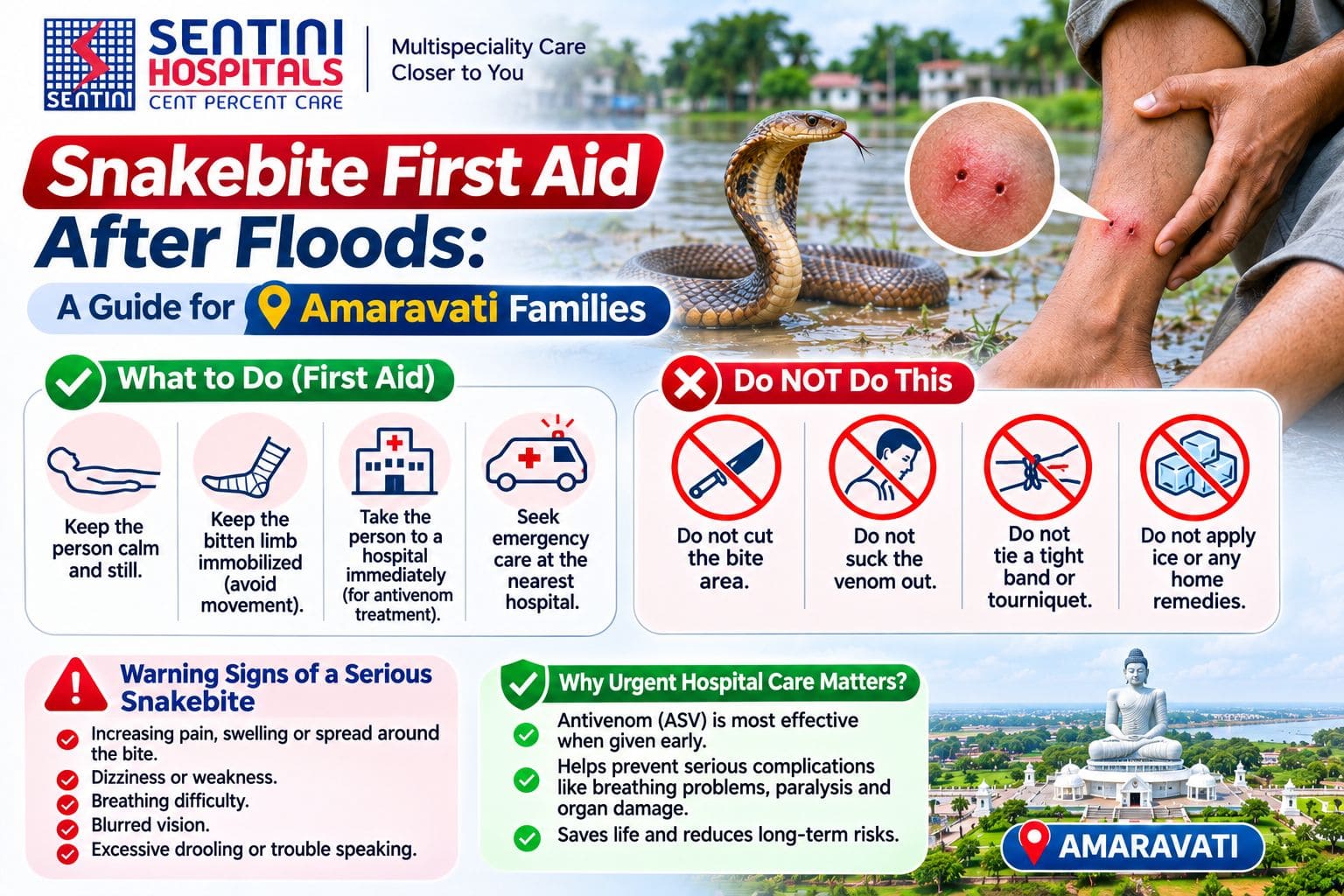
Snakebite first aid: what to do
These steps follow the do's and don'ts promoted by India's National Centre for Disease Control (NCDC) under the National Programme for Prevention and Control of Snakebite Envenoming and WHO guidance.
- Move away from the snake. Step back carefully so no one else is bitten.
- Reassure the person. Many bites are from non-venomous snakes, and fear makes the heart beat faster. Speak calmly.
- Call 108 or arrange transport to the nearest hospital that can give anti-snake venom.
- Keep the bitten limb still. Use a splint, a folded newspaper, a stick or a sling. Movement can help venom spread.
- Remove rings, bangles, anklets, watches and tight clothing near the bite before swelling starts.
- Lay the person on their left side in the recovery position if they feel faint or are vomiting, with the bitten limb kept still.
- Do not let the person walk, run or drive. Carry them if possible, or use a two-wheeler with another rider, an auto or an ambulance.
- Note the time of the bite and any symptoms that start. If it is safe, take a photo of the snake from a distance, but never try to catch it.
What NOT to do after a snakebite
Many traditional practices are still common in villages. They waste precious time and can cause harm.
- Do not tie a tight tourniquet or cord above the bite. It can cut off blood flow and damage the limb.
- Do not cut the bite or try to suck out the venom.
- Do not apply herbs, pastes, chemicals, ice or heat to the wound.
- Do not wait for a traditional healer, a mantra or a "snake stone". Go straight to hospital.
- Do not give alcohol or painkillers such as aspirin or ibuprofen, which can make bleeding worse.
- Do not try to catch or kill the snake. It puts more people at risk.
Time matters more than anything else. The goal of snakebite first aid is simple: keep the person still and calm, and get them to a hospital that can give anti-snake venom as quickly as possible.
Symptoms to tell the doctor about
Symptoms depend on the type of snake and how much venom was injected. Some appear within minutes; others take a few hours. Watch for:
- Pain, swelling or bruising spreading up the limb
- Fang marks, blistering or darkening skin around the bite
- Bleeding from the gums, nose, the bite or old wounds, or blood in urine
- Drooping eyelids, double vision, slurred speech or difficulty swallowing
- Weakness, difficulty breathing or a hoarse voice
- Vomiting, stomach pain, sweating or fainting
- Passing very little urine
Even if the person feels fine, every snakebite should be checked at a hospital. The NHS advises that people bitten by a snake usually need to stay in hospital for observation for at least 24 hours.
What happens at the hospital
At the emergency department, doctors will check breathing, pulse and blood pressure, look at the bite and ask about when and where it happened. Common steps include:
- Blood tests, including a clotting test, to look for bleeding problems
- Observation for signs of nerve or muscle weakness
- Anti-snake venom (ASV) through a drip if there are signs of envenoming. Doctors decide the dose based on symptoms and test results
- Tetanus protection and care of the wound
- Breathing support on a ventilator if the muscles used for breathing are weak
- Kidney monitoring, and dialysis if the kidneys are affected, which can happen after some viper bites
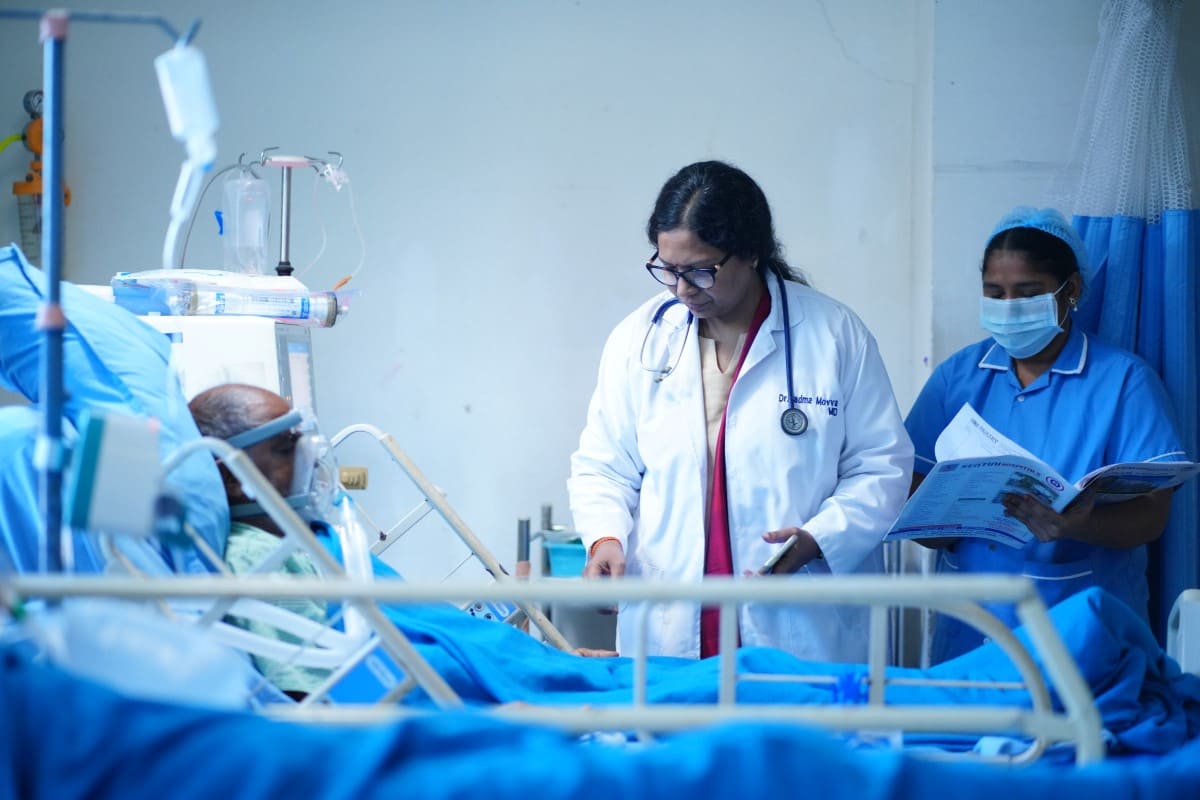
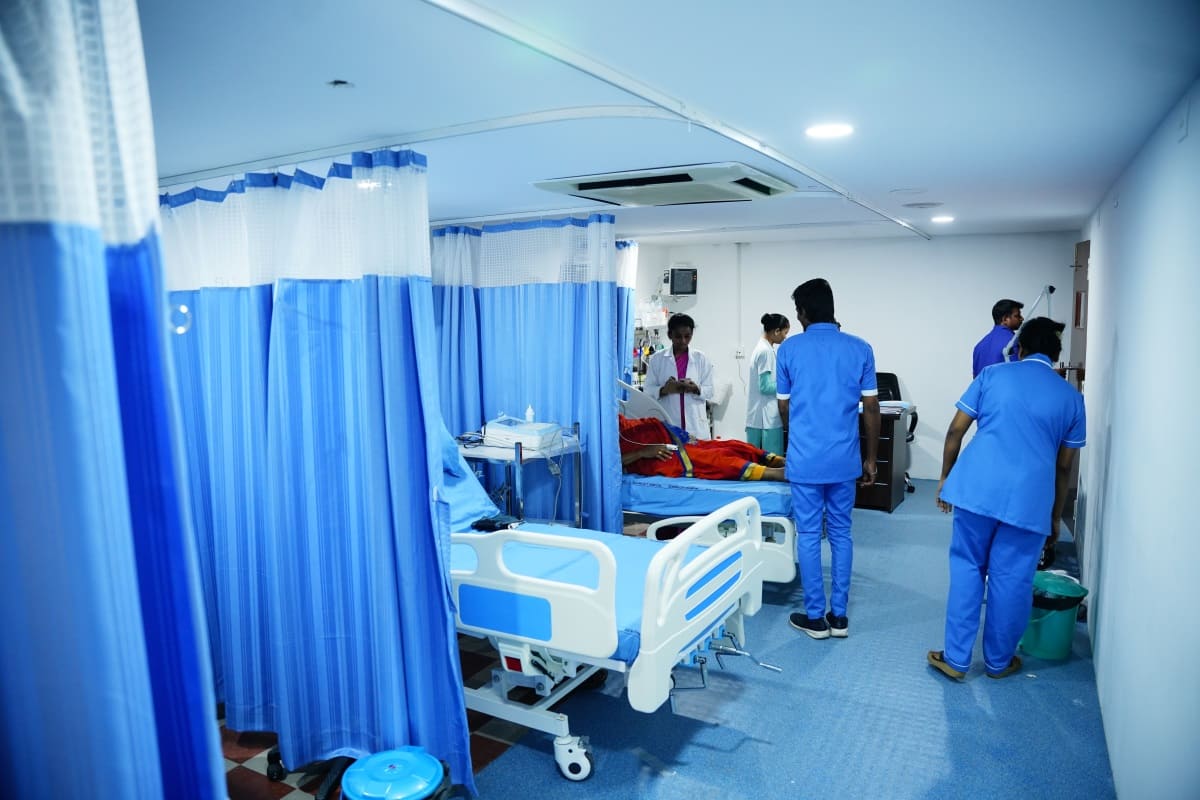
Sentini Hospitals' Emergency and Critical Care department describes mechanical ventilation and dialysis for acute kidney injury among the support provided in its critical care units. The hospital's Trauma Care page states that its trauma and emergency team is available 24/7.
How to lower the risk of snakebite after floods
Most bites happen when people accidentally step on or touch a snake. A few simple habits help:
- Use a torch when walking outside at night, especially on bunds, near fields and in courtyards.
- Wear boots or closed footwear in fields and long grass, and gloves when moving firewood, bricks, hay or debris.
- Sleep on a cot rather than the floor, and tuck a mosquito net under the mattress. This also lowers the risk of krait bites.
- Shake out shoes, bedding and clothes left on the floor before using them.
- Clear rubbish, rubble and long grass around the house, and store grain in closed containers so rats, which attract snakes, stay away.
- Check before putting your hand into holes, under stones or in dark corners while cleaning up after the flood.
- Keep children away from flooded fields and canals, and teach them to step back and call an adult if they see a snake.
When to go to the hospital
| Situation | What to do |
|---|---|
| Any snakebite, even if it looks minor | Go to a hospital that can give anti-snake venom straight away |
| Swelling spreading, bleeding gums or blood in urine | Emergency: call 108 |
| Drooping eyelids, difficulty swallowing or breathing | Emergency: call 108 |
| Woke up with sudden stomach pain or weakness after sleeping on the floor | Treat as a possible krait bite and go to hospital immediately |
| Bitten but feeling well | Still go to hospital for observation; symptoms can appear later |
How Sentini Hospitals can help
Sentini Hospitals is on Ring Road, opposite Novotel Hotel, in Vijayawada, across the Krishna river from the Amaravati capital region. The hospital provides emergency and critical care, trauma care and kidney care through its Nephrology department.
If someone has been bitten by a snake, call 108 first, or reach the nearest hospital that has anti-snake venom without delay. For directions or information about Sentini Hospitals, call +91 9010726666 or visit our contact page.
Frequently Asked Questions
What is the first aid for a snakebite?
Keep the person calm and still, remove rings, bangles and tight clothing near the bite, keep the bitten limb still with a splint or sling, lay them on their left side if they feel faint, and take them to a hospital with anti-snake venom as quickly as possible. Call 108 for an ambulance.
Should I tie a cloth or rope above a snakebite?
No. NCDC and WHO guidance advises against tight tourniquets. A tight band can cut off blood flow and damage the limb, and it does not replace hospital treatment. Keep the limb still and get to hospital.
How do I know if a snake was venomous?
You often cannot tell by looking, and some bites, like krait bites, may cause little pain at first. Treat every snakebite as an emergency and let doctors assess the person with an examination and blood tests.
How long after a snakebite do symptoms appear?
Some symptoms, such as pain and swelling, can start within minutes. Others, such as drooping eyelids, weakness, bleeding or reduced urine, may take several hours. This is why people are usually observed in hospital for at least 24 hours.
Is anti-snake venom available in government ambulances in Andhra Pradesh?
The Andhra Pradesh health minister said in September 2026 that anti-snake venom is being made available at government hospitals and in 108 ambulances. Calling 108 is the quickest way to get emergency help after a bite.
How can I prevent snakebites at home after floods?
Use a torch at night, wear closed footwear and gloves while clearing debris, sleep on a cot under a tucked-in mosquito net, shake out shoes and bedding, and keep the area around the house clear of rubbish, firewood piles and long grass.
Medical disclaimer: This article is for general health education and does not replace advice from a qualified doctor. In an emergency, call 108. Information is based on WHO, NCDC and NHS guidance and news reports available on 28 October 2026.