Pneumonia Symptoms in Adults: When to See a Doctor in Tadepalli and Vijayawada
A cough that hangs on after a fever is common during the rainy weeks in Tadepalli and Vijayawada. Most of the time it is a cold or flu that settles in a week. But sometimes the infection travels deeper, into the lungs. Knowing the pneumonia symptoms in adults helps you recognise when a cough needs a doctor, and when it needs emergency care. With World Pneumonia Day on 12 November 2026, this guide explains the signs, the risks and the practical steps families can take.
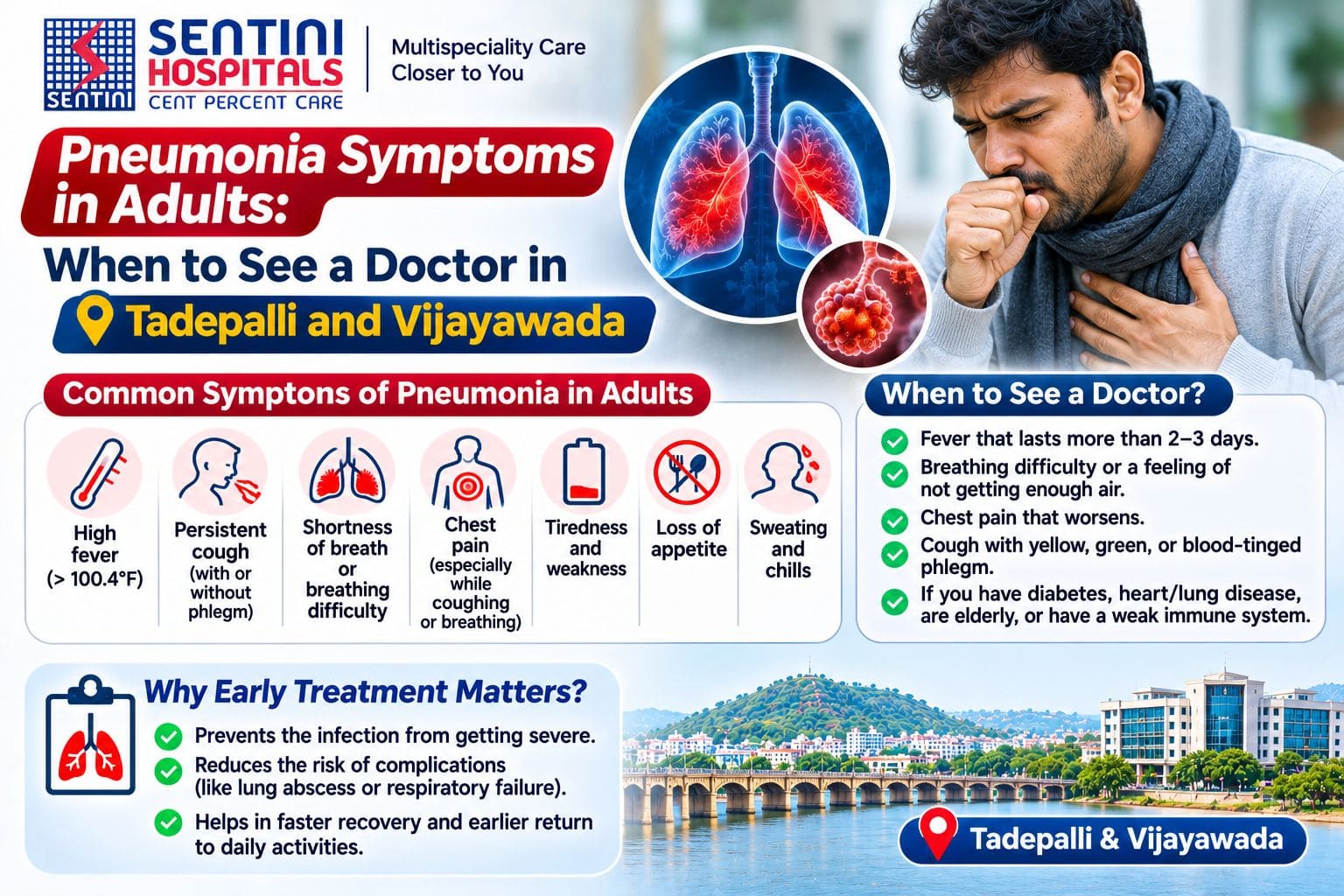
Quick answer: Pneumonia symptoms in adults include a cough (often with yellow or green phlegm), fever, shortness of breath, chest pain that is worse when you breathe or cough, body aches, tiredness and loss of appetite. Older adults may become confused. See a doctor if a cough with fever is not improving or you feel breathless. Call 108 or go to an emergency department if you are struggling to breathe, have blue or grey lips, cough up blood or suddenly become confused.
Why pneumonia is in focus this season
World Pneumonia Day is marked every year on 12 November. The Every Breath Counts Coalition, which coordinates the day, notes that pneumonia claimed 2.5 million lives in 2023, including 610,000 children under five.
Closer to home, the weeks after heavy rain bring conditions in which chest infections are more common. Seasonal fevers with cough, cold and sore throat have been reported in several parts of Andhra Pradesh this season, and Cyclone Arnab is expected to bring heavy rain to Krishna, NTR and Guntur districts on 28 and 29 October 2026. Damp homes, crowded relief shelters and smoke from cooking fires can all make breathing problems worse for vulnerable people.
What is pneumonia?
Pneumonia is inflammation of the lungs, usually caused by an infection. The tiny air sacs in the lungs, called alveoli, fill with fluid or pus. This makes it harder for oxygen to pass into the blood, which is why breathlessness is a key symptom.
According to the NHS, pneumonia is usually caused by a bacterial or viral infection. It can follow other infections such as flu, respiratory syncytial virus (RSV) or COVID-19. Less often, it is caused by a fungal infection, or by food, drink or vomit entering the lungs (aspiration pneumonia) (NHS: Pneumonia).
Pneumonia symptoms in adults
The NHS notes that symptoms can start suddenly or develop gradually over a few days.
Common symptoms
- A cough, which may bring up yellow, green or rust-coloured phlegm
- Fever with chills or shivering
- Shortness of breath, even at rest or when walking a short distance
- Chest pain, often sharp and worse when breathing in or coughing
- Body aches and feeling very tired
- Loss of appetite
- Wheezing
- Confusion, which is more common in older people
Symptoms that may be easy to miss
Older adults, and people with diabetes or other long-term illnesses, may not have a high fever. They may instead seem unusually drowsy, confused, weak or off their food. Family members often notice these changes first.
Pneumonia, a cold or flu: how to tell the difference
Only a doctor can confirm pneumonia, but this table shows typical patterns.
| Feature | Common cold | Flu | Pneumonia |
|---|---|---|---|
| Onset | Gradual | Sudden | Sudden or over a few days |
| Fever | Mild or none | Often high | Often present, may be absent in older adults |
| Cough | Mild, dry or with little phlegm | Dry, can be troublesome | Persistent, often with coloured phlegm |
| Breathing | Normal | Usually normal | Fast or difficult breathing, breathless on effort |
| Chest pain | Rare | Mild chest discomfort | Sharp pain when breathing or coughing |
| Usual course | Better in about a week | Better in 1 to 2 weeks | Needs medical assessment; recovery often 2 to 4 weeks |
A simple rule: if a "cold" gets worse instead of better after 3 to 5 days, or a fever returns after settling, it is worth seeing a doctor to rule out a chest infection.
Who is at higher risk of serious pneumonia?
Anyone can get pneumonia, but the NHS lists groups who are more likely to become seriously ill and may need hospital care:
- Adults over 65
- People with heart disease or a long-term lung condition such as COPD or asthma
- Babies and young children
- People with a weakened immune system, for example from diabetes, kidney disease, cancer treatment or HIV
- People who smoke or chew tobacco, or who are exposed to smoke indoors
For children, the World Health Organization notes that indoor air pollution from cooking with biomass fuels such as wood or dung, crowded homes and parental smoking all raise the risk (WHO: Pneumonia in children).
Signs of pneumonia in children
WHO advises that in children under five with a cough or difficult breathing, fast breathing or the lower chest pulling in with each breath are signs of pneumonia. A child who cannot drink or feed, is very sleepy, or has a fit needs emergency care.
When is pneumonia an emergency?
Based on NHS guidance, seek urgent help in these situations:
| Situation | What to do |
|---|---|
| Cough with fever for more than 3 days, coloured phlegm, chest pain when breathing | See a doctor within 24 hours |
| Feeling short of breath, or symptoms getting worse despite medicines | See a doctor the same day |
| Struggling to breathe, gasping, unable to finish sentences | Call 108 or go to an emergency department now |
| Blue, grey or pale lips, tongue or skin | Call 108 immediately |
| Coughing up blood, sudden confusion, or a baby who is floppy or cannot be woken | Call 108 immediately |
If you can, ask someone else to drive you, and carry a list of your regular medicines.
How is pneumonia diagnosed?
A doctor will ask about your symptoms, listen to your chest with a stethoscope and check your temperature, breathing rate and oxygen level with a pulse oximeter. Tests may include:
- A chest X-ray to look for areas of infection in the lungs
- Blood tests to check for infection and how your body is coping
- Sputum tests to identify the germ
- A CT scan or bronchoscopy in some cases, especially if pneumonia does not clear
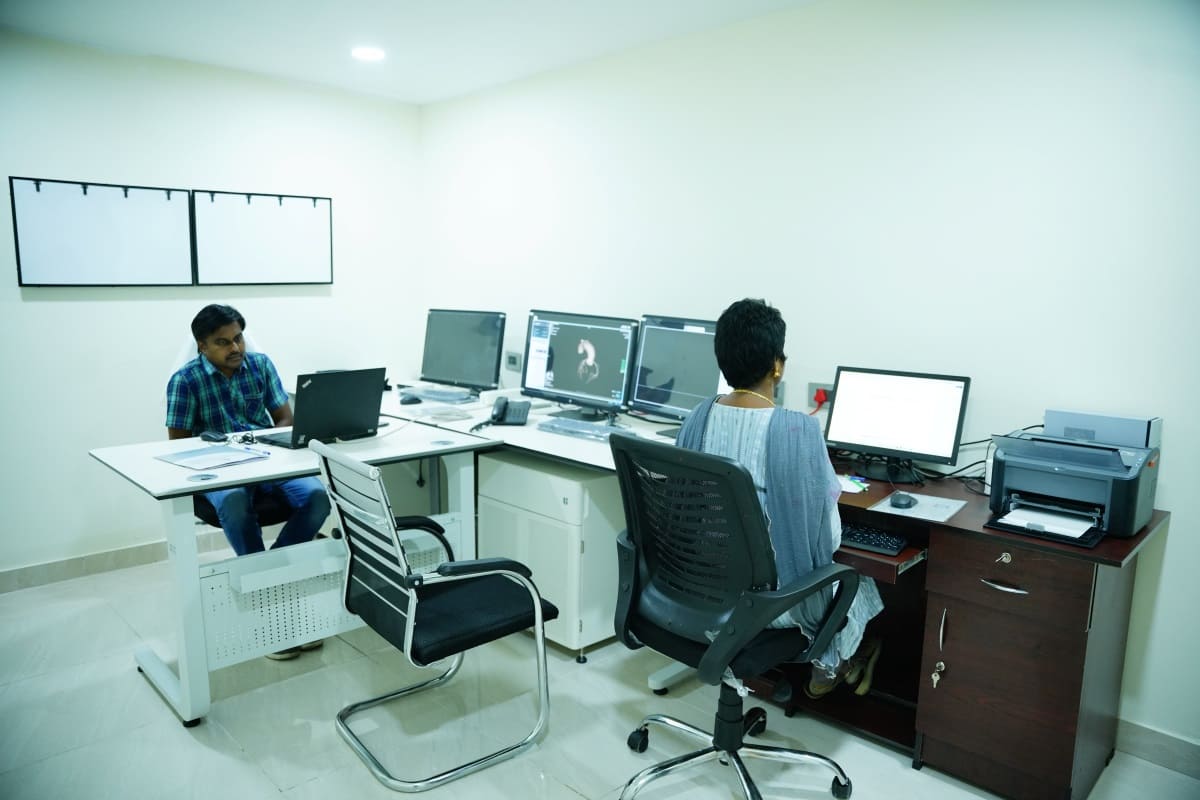
Sentini Hospitals' Pulmonology department lists chest X-ray, CT scan and bronchoscopy among the investigations used for lung conditions, and notes that non-resolving pneumonia should be referred to a pulmonologist. Imaging services are described on the Diagnostics and Imaging page.
How is pneumonia treated?
Treatment depends on the cause and how unwell you are.
- Bacterial pneumonia is usually treated with antibiotics. The NHS advises finishing the full course, and contacting your doctor if you do not feel better after 2 to 3 days.
- Viral pneumonia does not respond to antibiotics, though antiviral medicines may be used for some infections such as flu.
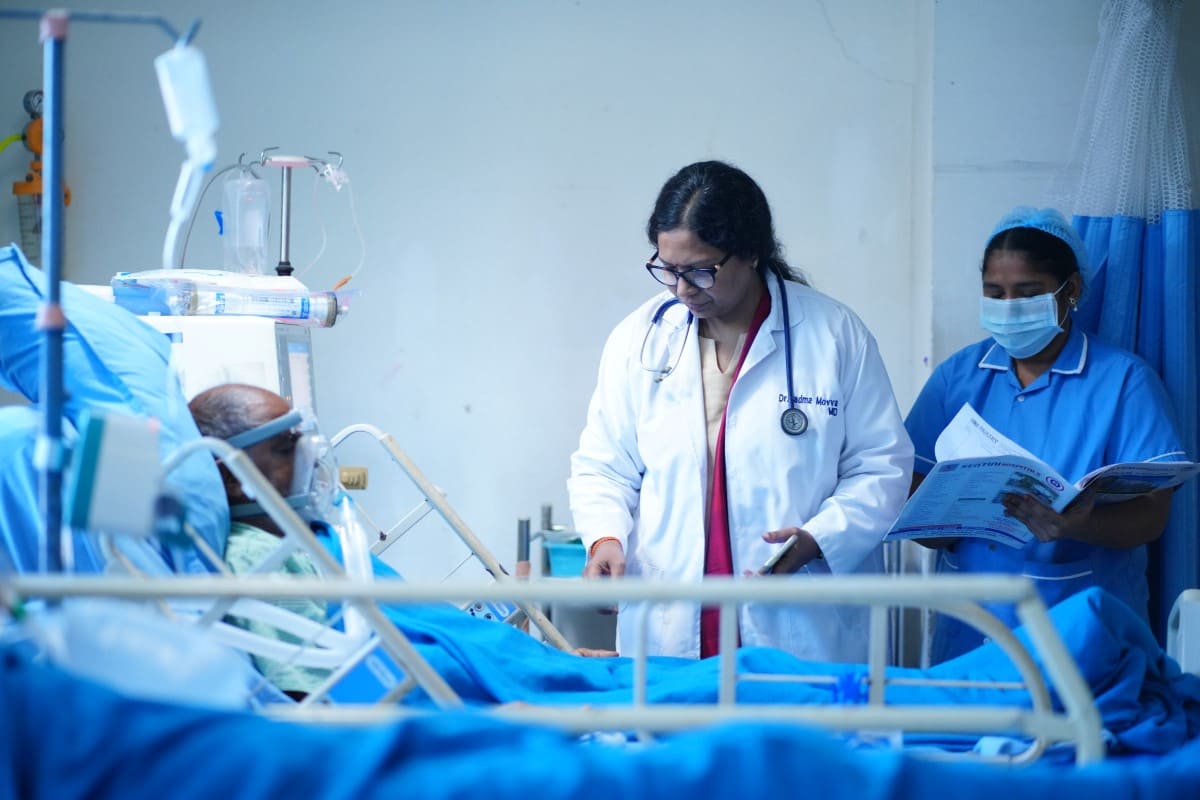
- In hospital, treatment may include antibiotics through a drip, oxygen, fluids and, sometimes, steroids. People who become very unwell may need care in an intensive care unit, including breathing support.
According to the NHS, most people get better in 2 to 4 weeks, although tiredness can last longer, especially in older adults.
Looking after yourself at home
If your doctor says you can recover at home, the NHS suggests:
- Rest until you feel better.
- Drink plenty of fluids to avoid dehydration.
- Take paracetamol for fever or pain if it is suitable for you.
- Cover your mouth and nose when you cough or sneeze, and wash your hands often.
- Do not smoke, and avoid indoor smoke from tobacco, mosquito coils and wood fires.
- Do not take cough syrups unless a doctor advises it, since coughing helps clear the infection.
How to lower your risk of pneumonia
Prevention is the strongest tool, particularly for older adults and people with long-term illnesses.
- Vaccination: pneumococcal and flu vaccines can help protect against common causes of pneumonia. For children, WHO notes that immunisation against Hib, pneumococcus, measles and whooping cough is the most effective way to prevent pneumonia. Ask your doctor which vaccines are suitable for you and your family.
- Stop smoking: the NHS notes that stopping smoking reduces your chance of getting pneumonia.
- Cleaner indoor air: use a gas stove rather than firewood where possible, keep kitchens ventilated, and avoid burning waste.
- Manage long-term conditions: keep diabetes, asthma, COPD and heart disease under control and take medicines as advised.
- Hand hygiene: wash hands with soap, particularly in crowded places such as relief shelters.
- Nutrition: for babies, WHO recommends exclusive breastfeeding for the first 6 months, which helps protect against pneumonia.
Pneumonia care near Tadepalli
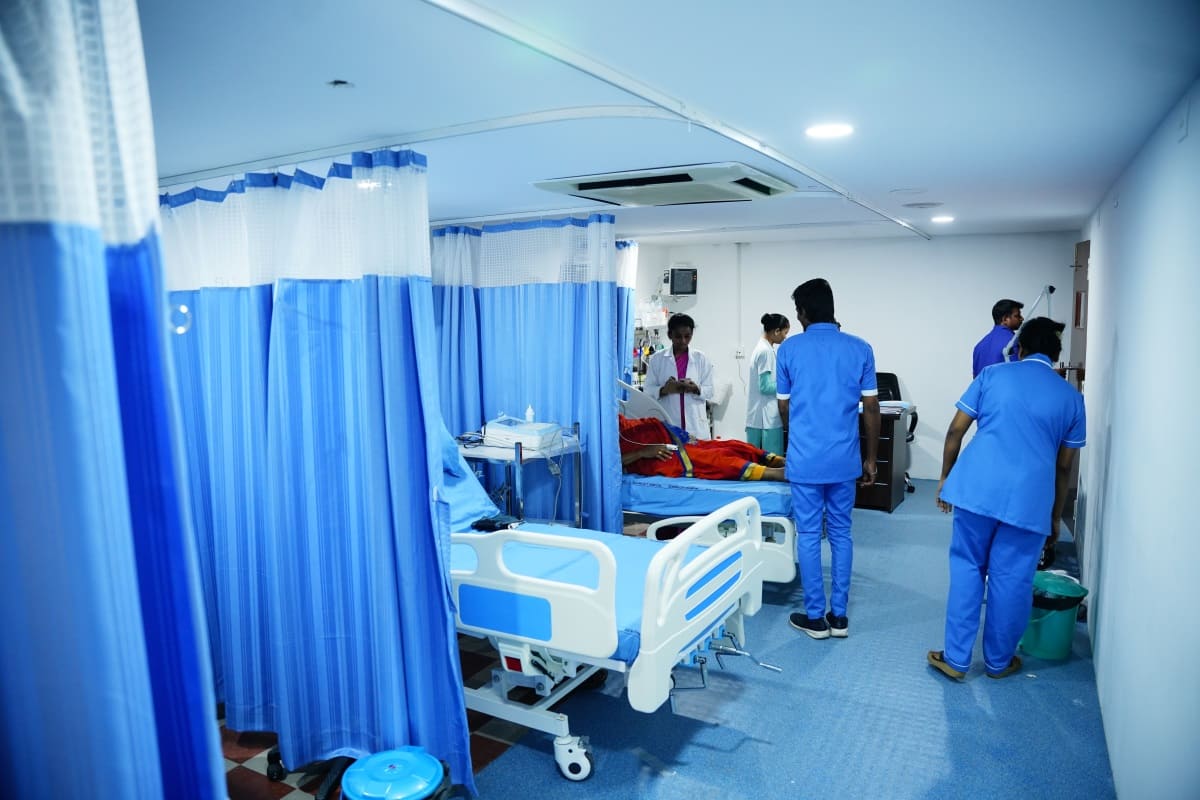
Tadepalli sits just across the Krishna river from Vijayawada, and Sentini Hospitals is on Ring Road, opposite Novotel Hotel. The hospital has a pulmonology department along with emergency and critical care services, which describe the use of ventilators when patients cannot breathe adequately on their own.
If you have a cough with fever that is not improving, or you are worried about breathlessness in an older family member, call +91 9010726666 or find directions on our contact page. If someone is struggling to breathe, call 108 straight away.
Frequently Asked Questions
What are the first signs of pneumonia in adults?
Early pneumonia symptoms in adults include a cough with phlegm, fever and chills, feeling short of breath, chest pain when breathing or coughing, and unusual tiredness. In older adults, confusion or drowsiness may be the first sign.
How do I know if my cough is pneumonia or just a cold?
A cold usually improves within a week and does not cause breathlessness. A cough that worsens after a few days, brings up coloured phlegm, or comes with fever, chest pain or breathlessness should be checked by a doctor, who may order a chest X-ray.
When should I go to the hospital for pneumonia?
Go to an emergency department or call 108 if you are struggling to breathe, have blue or grey lips, cough up blood, or suddenly become confused. Also seek help quickly if you are over 65, have heart or lung disease, or are not improving after 2 to 3 days of antibiotics.
How long does it take to recover from pneumonia?
According to the NHS, most people get better in 2 to 4 weeks. Tiredness and a cough can last longer, especially in older adults and people with other health conditions.
Is pneumonia contagious?
The germs that cause pneumonia, such as bacteria and viruses, can spread through coughs and sneezes. Covering your mouth, washing hands and keeping a sick person's room ventilated helps reduce spread.
Can pneumonia be prevented?
The risk can be lowered with vaccines such as pneumococcal and flu vaccines, stopping smoking, reducing smoke indoors, managing long-term illnesses, and good hand hygiene. Ask your doctor which vaccines suit you.
Medical disclaimer: This article is for general health education and does not replace advice from a qualified doctor. If you are unwell, please consult a doctor. Information is based on NHS and WHO guidance available on 27 October 2026.