Leptospirosis Symptoms After Floods: A Guide for Vijayawada Families
When the rain stops and the water starts to drain away, most families in Vijayawada turn to cleaning up: clearing silt from the house, wading through lanes to reach the market, or helping neighbours move their belongings. That is also the time to watch for leptospirosis symptoms. Leptospirosis is a bacterial infection that spreads through water and soil contaminated with the urine of infected animals, and it often starts like an ordinary fever.
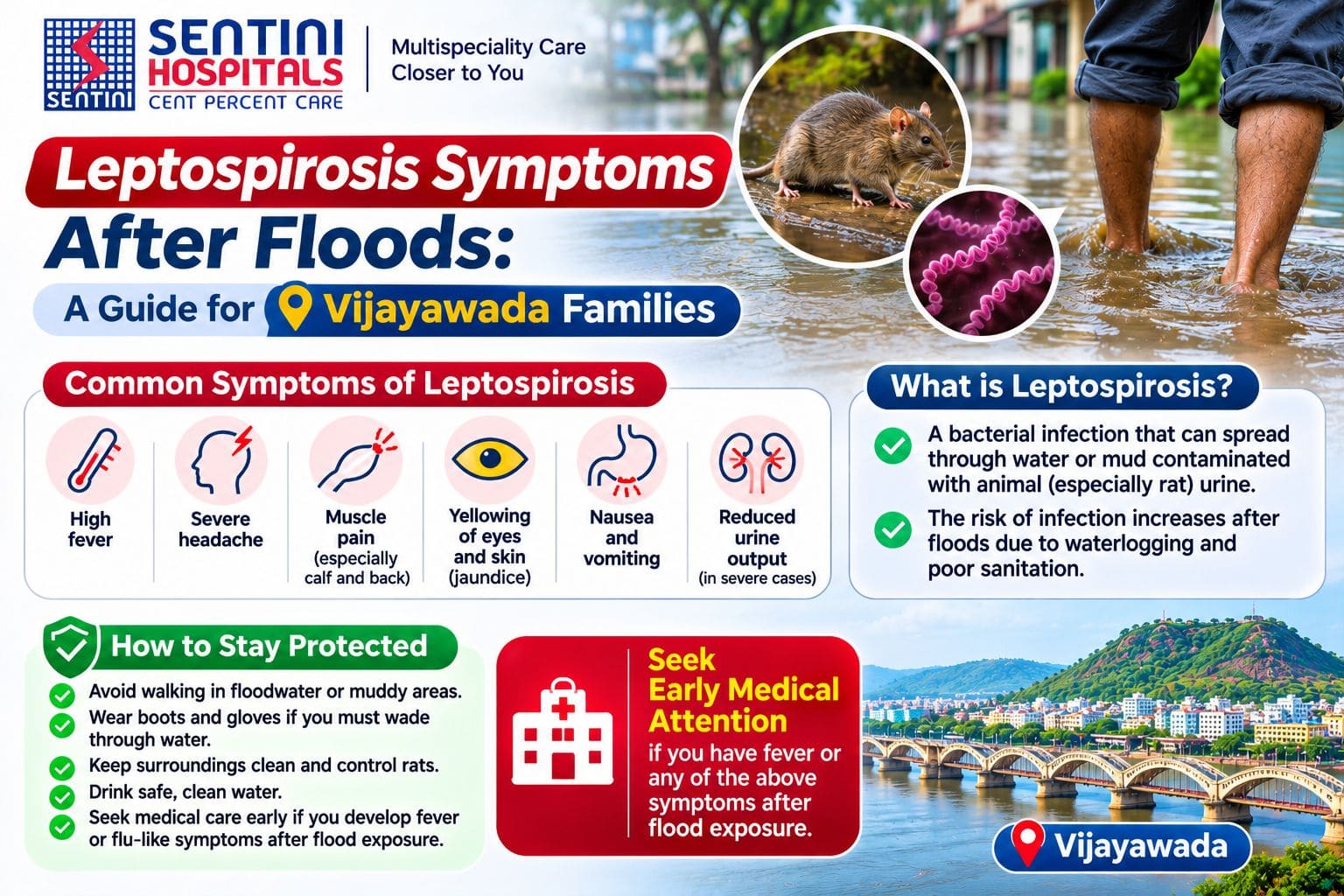
Quick answer: Leptospirosis symptoms usually begin suddenly, a few days to a few weeks after contact with floodwater, wet soil or animal urine. Common symptoms are high fever, headache, body and muscle aches (especially in the calves), red eyes, nausea, vomiting, stomach pain and diarrhoea. See a doctor if you develop a fever after being in floodwater. Go to an emergency department straight away if you notice yellow eyes or skin, passing very little or no urine, breathlessness, chest pain, bleeding or confusion.
Why leptospirosis matters in Vijayawada this week
Cyclone Arnab is forecast by the India Meteorological Department (IMD) to cross the Andhra Pradesh and Yanam coast between Bapatla and Visakhapatnam, close to Yanam, by the forenoon of 28 October 2026. Officials told the Chief Minister on 26 October that heavy to extremely heavy rainfall is likely on 28 and 29 October across several districts, including Krishna, NTR and Guntur, according to The New Indian Express (27 October 2026).
Andhra Pradesh's health department has asked district teams to keep emergency services running from 27 to 30 October and to watch for diarrhoea, fever, leptospirosis, mosquito-borne illnesses, snakebites and drowning in flood-affected areas, as reported by Newsmeter on 26 October 2026.
Leptospirosis is not new to the state. According to Union Health Ministry data tabled in the Rajya Sabha and reported by The South First, India recorded 8,121 confirmed leptospirosis cases between January and June 2026, of which 416 were from Andhra Pradesh. The National Centre for Disease Control (NCDC) added Andhra Pradesh to its Programme for Prevention and Control of Leptospirosis in 2022-23 (NCDC: Programme for Prevention and Control of Leptospirosis).
Low-lying colonies along the Budameru and the Krishna river, as well as farm areas around the city, can stay waterlogged for days after heavy rain. That is when the risk of exposure rises.
What is leptospirosis?
Leptospirosis, sometimes called Weil's disease in its severe form, is caused by Leptospira bacteria. The bacteria live in the kidneys of infected animals and are passed out in their urine. According to the NHS, the animals most commonly involved are rats, mice, cows, pigs and dogs (NHS: Leptospirosis).
When floodwater mixes with animal urine, the bacteria can survive in water and wet soil. People become infected when this water or soil:
- Gets into a cut, scratch or cracked skin, especially on the feet and legs
- Splashes into the eyes, nose or mouth
- Is swallowed, for example when drinking untreated water
Leptospirosis very rarely spreads from one person to another. It is mainly an infection people pick up from the environment.
Who is at higher risk?
Anyone who has contact with floodwater can be exposed, but risk is higher for:
- People who wade or walk barefoot through flooded streets and drains
- Farmers and farm workers in paddy fields and wet soil
- Sanitation workers, drain cleaners and people clearing debris after floods
- People who handle cattle, pigs or dogs
- Families cleaning homes that were flooded, especially without gloves or boots
Leptospirosis symptoms to watch for
Leptospirosis can look like many other monsoon fevers, including dengue, malaria and typhoid. The NHS notes that many people have no symptoms or only mild flu-like symptoms, but some people become seriously ill. The US Centers for Disease Control and Prevention (CDC) advises watching for symptoms for 2 to 30 days after a flood.
Early symptoms
- Sudden high fever with chills
- Headache
- Muscle aches, often felt strongly in the calves and lower back
- Red eyes (redness in the white part of the eye) without much discharge
- Nausea, vomiting, stomach pain or diarrhoea
- Loss of appetite and tiredness
- Sometimes a skin rash
Warning signs of severe illness
In a smaller number of people, the infection affects the liver, kidneys, lungs or blood vessels. The NHS lists these signs as needing urgent medical help:
- Yellow eyes or skin (jaundice)
- Passing very little urine or none at all
- Swelling of the ankles, feet or hands
- Shortness of breath or chest pain
- A rash
Other signs that need emergency care include coughing up blood, bleeding from the gums or nose, severe drowsiness, confusion or a fit.
Leptospirosis or another monsoon fever?
Only a doctor and laboratory tests can tell these fevers apart, but the table below shows why your history of flood exposure is important information to share.
| Illness | How it usually spreads | Features that may point towards it |
|---|---|---|
| Leptospirosis | Floodwater or wet soil contaminated with animal urine | Recent wading in floodwater, calf muscle pain, red eyes, jaundice or low urine later |
| Dengue | Bite of an infected Aedes mosquito | Fever, severe body ache, pain behind the eyes, rash, low platelets |
| Malaria | Bite of an infected Anopheles mosquito | Fever that comes with shivering and sweating, sometimes in cycles |
| Typhoid | Contaminated food or water | Fever that rises over several days, stomach pain, constipation or diarrhoea |
| Viral fever or flu | Droplets from coughs and sneezes | Fever with cough, cold and sore throat |
Tell the doctor about floodwater. If you develop a fever after the rains, mention any wading, cleaning or farm work in floodwater, any cuts on your feet, and the dates. This helps the doctor decide which tests to order and whether to start treatment early.
How is leptospirosis diagnosed and treated?
Diagnosis
Doctors usually begin with your symptoms and history of exposure. Blood and urine tests can check for infection and show how the liver and kidneys are working. Specific tests for leptospirosis may also be ordered. Because results can take time, doctors sometimes begin treatment based on the clinical picture.
Treatment
According to the NHS, leptospirosis is usually treated with antibiotics, and most people recover within a few days or weeks. It is important to finish the full course even if you feel better. People with severe illness may need hospital care.
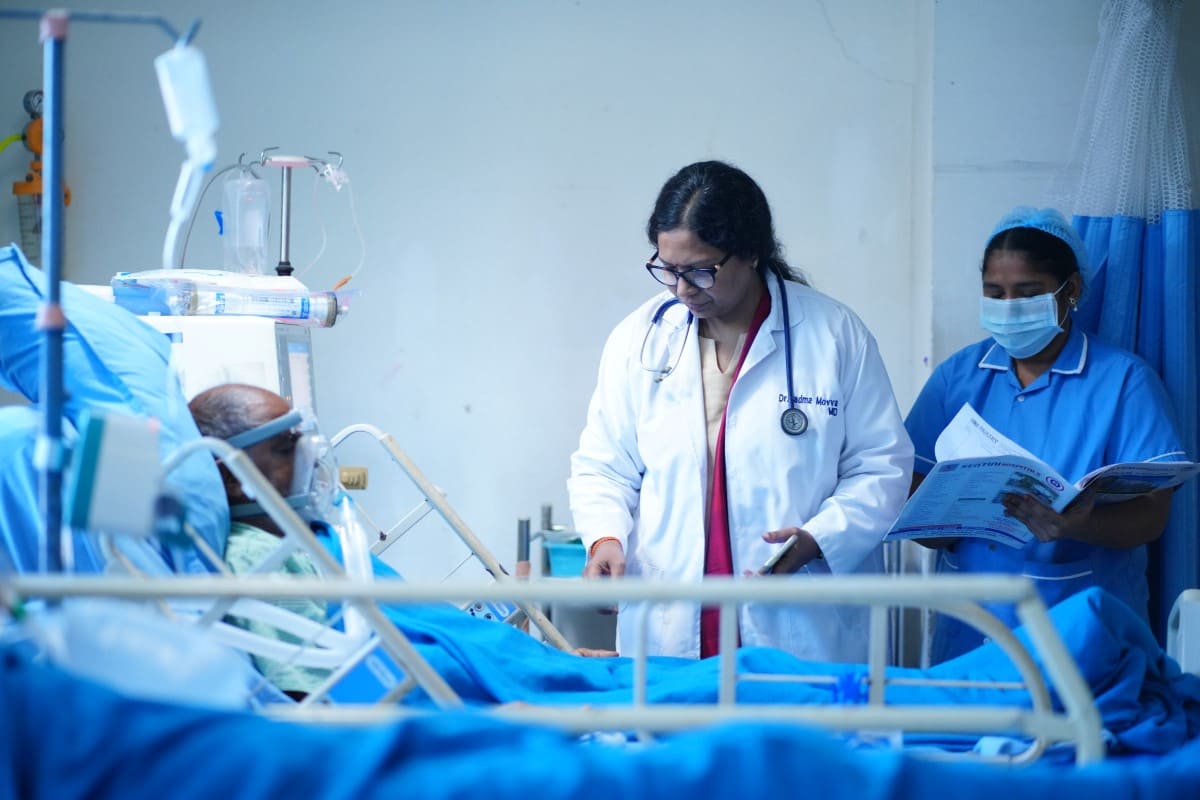
In a hospital, care for severe leptospirosis may include:
- Intravenous antibiotics and fluids
- Close monitoring of kidney function, liver function, blood counts and oxygen levels
- Dialysis if the kidneys are not working well
- Breathing support if the lungs are affected
Do not take antibiotics on your own or from an old prescription. Doctors choose the medicine and dose based on your condition, age and other health problems.
Why early care helps
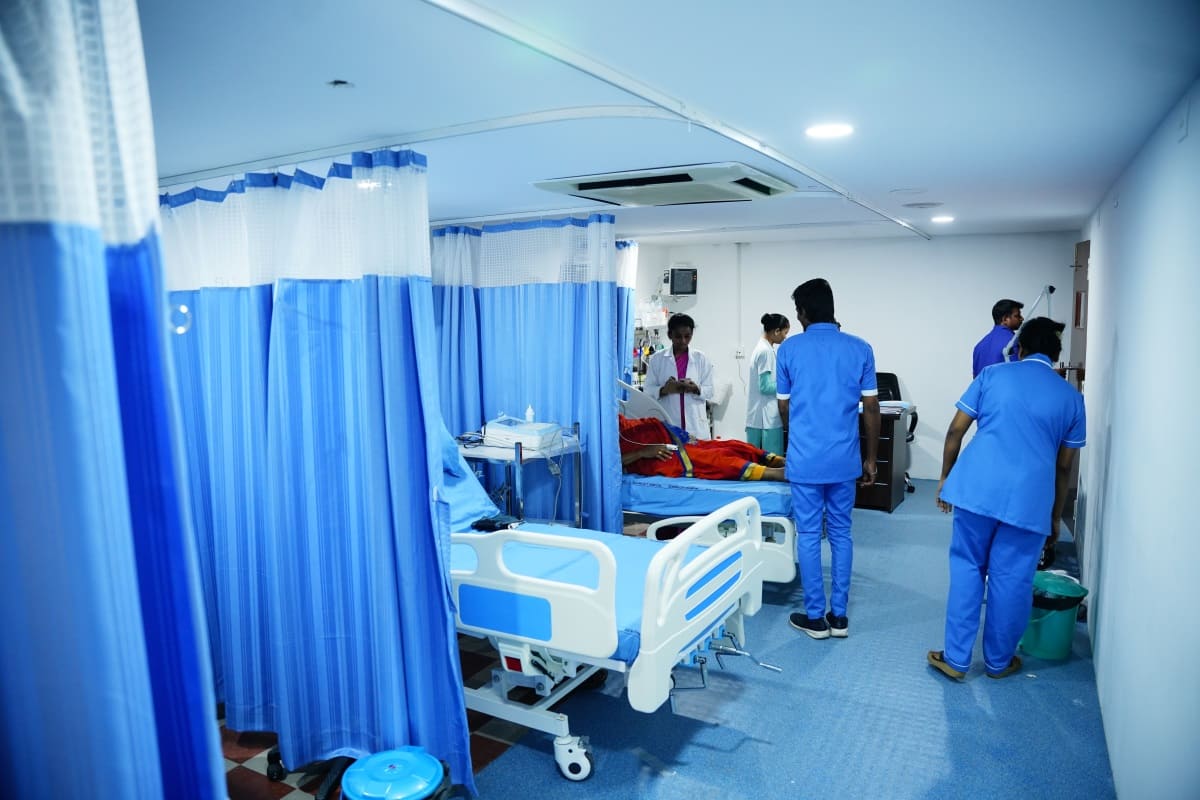
Leptospirosis can be treated, and early medical assessment gives doctors time to check for complications before they become serious. Sentini Hospitals' Emergency and Critical Care department describes the use of ventilators and dialysis for patients with acute kidney injury in its critical care units. Kidney care, including dialysis, is also covered on the Nephrology page.
How to prevent leptospirosis during and after floods
There is no vaccine for people in routine use, so prevention depends on reducing contact with contaminated water and soil. These steps are based on NHS and CDC guidance.
- Avoid wading through floodwater, drains and stagnant water whenever possible.
- Wear rubber boots and gloves if you must enter floodwater or clean up after a flood.
- Cover cuts and scratches with waterproof plasters before going out.
- Wash and shower with clean water and soap as soon as possible after contact with floodwater.
- Do not swim or bathe in flooded canals, ponds or rivers.
- Drink only boiled or treated water until the municipal supply is declared safe.
- Keep food covered and store grains in closed containers so rats cannot reach them.
- Do not touch dead animals with bare hands; report them to the local body.
- Clear garbage around the home to reduce rats.
Doxycycline: ask before you take it
During some outbreaks, health authorities give doxycycline to people at high risk of exposure. This is a decision for doctors and public health teams. Doxycycline is not suitable for everyone, including pregnant women and young children, so do not start it without medical advice.
When to see a doctor in Vijayawada
| Situation | What to do |
|---|---|
| Fever, headache or body ache within a month of floodwater contact | See a doctor within 24 hours and mention the exposure |
| Fever with red eyes, severe calf pain or vomiting | See a doctor the same day |
| Yellow eyes or skin, very little urine, swelling | Go to an emergency department now |
| Breathlessness, chest pain, coughing blood, bleeding, confusion or a fit | Call 108 for an ambulance or go to the nearest emergency department immediately |
For children, older adults, pregnant women and people with diabetes, kidney disease or liver disease, it is reasonable to seek medical advice sooner rather than later.
How Sentini Hospitals can help
Sentini Hospitals, on Ring Road opposite Novotel Hotel in Vijayawada, provides emergency and critical care, nephrology and laboratory services. Its Pathology and Laboratory Medicine page describes microbiology and haematology testing, which includes the blood counts and infection tests often used when assessing a fever.
If you or a family member has a fever after the floods, call +91 9010726666 or visit our contact page for directions. In an emergency, call 108 or go to the nearest hospital without delay.
Frequently Asked Questions
What are the first symptoms of leptospirosis?
The first leptospirosis symptoms are usually a sudden high fever, headache, chills, muscle aches (often in the calves), red eyes, nausea, vomiting and sometimes diarrhoea. These can look like flu or other monsoon fevers, so mention any recent floodwater contact to your doctor.
How long after floodwater contact do leptospirosis symptoms start?
Symptoms usually appear within about 2 to 30 days after exposure, according to the US CDC. Keep watching for a fever for around a month after you have waded through or cleaned up floodwater.
Is leptospirosis contagious from person to person?
Leptospirosis very rarely spreads from one person to another. People are usually infected through water, soil or food contaminated with the urine of infected animals such as rats, cattle, pigs and dogs.
Can leptospirosis be treated?
Yes. Leptospirosis is usually treated with antibiotics prescribed by a doctor, and most people recover in a few days or weeks. People with severe illness affecting the kidneys, liver or lungs may need hospital care, sometimes including dialysis or breathing support.
How can I protect my family from leptospirosis after a flood?
Avoid wading in floodwater, wear rubber boots and gloves during clean-up, cover cuts with waterproof plasters, wash with soap and clean water after contact, drink boiled or treated water, and keep food and grains in closed containers away from rats.
Should I take doxycycline to prevent leptospirosis?
Only if a doctor or public health team advises it. Doxycycline is sometimes used for people at high risk during outbreaks, but it is not suitable for everyone, including pregnant women and young children.
Medical disclaimer: This article is for general health education and does not replace advice from a qualified doctor. If you are unwell, please consult a doctor. Information is based on NHS, CDC and NCDC guidance and news reports available on 27 October 2026.