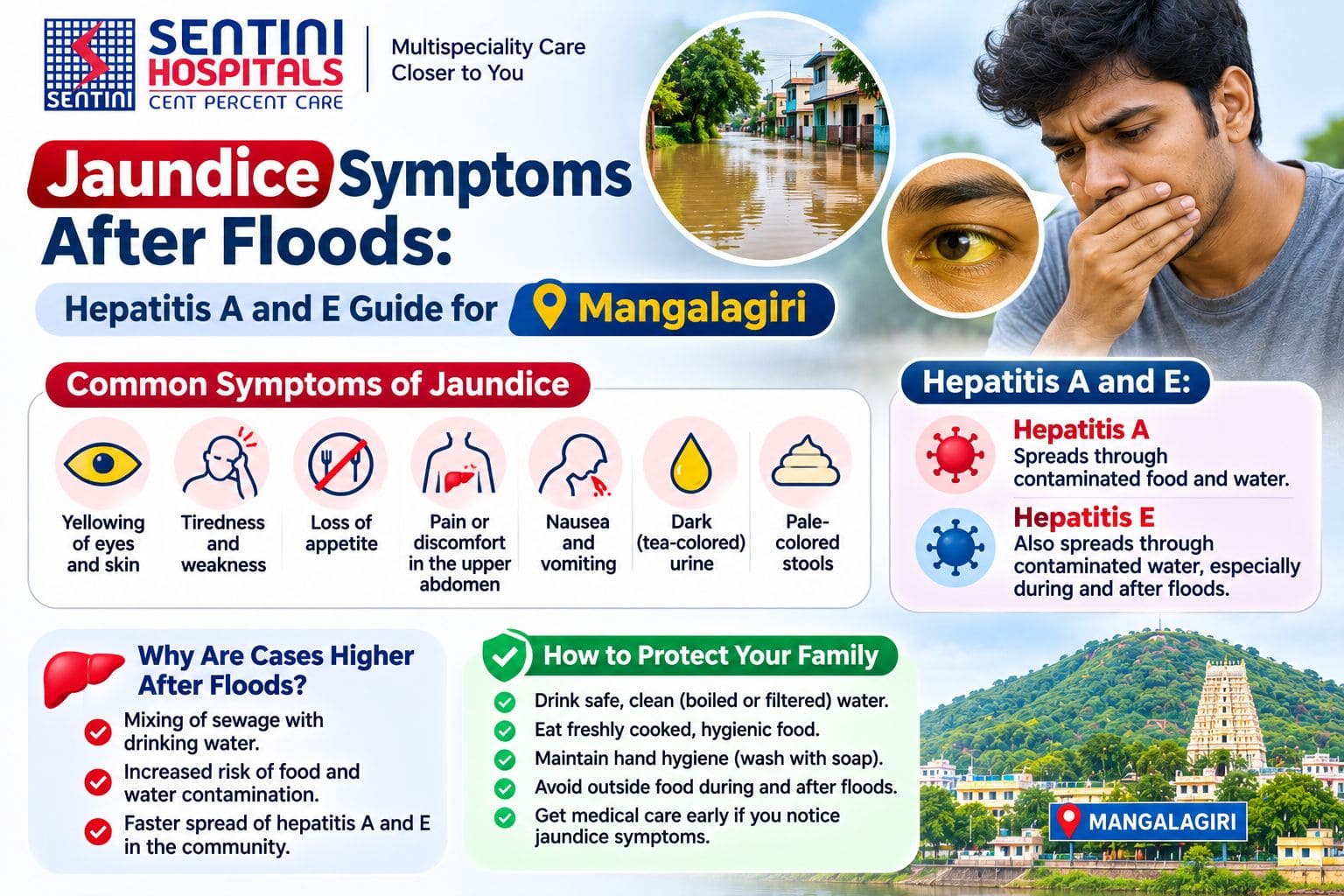
Jaundice Symptoms After Floods: Hepatitis A and E Guide for Mangalagiri
When floodwater mixes with drains and wells, the risk is not only fever and diarrhoea. A few weeks later, some people notice their eyes turning yellow, their urine getting darker and their appetite disappearing. These are common jaundice symptoms, and after floods they are often caused by hepatitis A or hepatitis E, two liver infections that spread through contaminated water and food.
Quick answer: Jaundice symptoms include yellow eyes and skin, dark yellow or tea-coloured urine, pale stools, tiredness, loss of appetite, nausea and pain in the upper right side of the abdomen. After floods, hepatitis A and hepatitis E are common causes. Most people recover with rest and medical care, but see a doctor if you notice yellow eyes or dark urine, and seek urgent care if there is confusion, drowsiness, bleeding, repeated vomiting, or if the person is pregnant.
Why jaundice after floods matters in Mangalagiri
Cyclone Arnab crossed the Andhra Pradesh coast on 28 October 2026, bringing heavy rain to several districts, including Krishna and NTR (The Indian Express, 28 October 2026). Before landfall, Andhra Pradesh's health department instructed district officials to test drinking water sources in affected villages, prevent the use of contaminated water, and monitor diarrhoea, fever and other infectious diseases in flood-affected areas, as reported by Newsmeter (26 October 2026).
Contaminated water has caused jaundice outbreaks in the state before. In October 2025, the national Integrated Disease Surveillance Programme (IDSP) weekly outbreak report recorded a jaundice outbreak in Parvathipuram Manyam district, where local teams chlorinated water sources and ran health education on safe drinking water.
Hepatitis A and E can take two to ten weeks to show symptoms, so families in Mangalagiri, Tadepalli and the villages along the Krishna should keep watch through November and into December, well after the floodwater has gone.
What is jaundice?
Jaundice is not a disease in itself. It is a sign that there is too much bilirubin, a yellow pigment, in the blood. Bilirubin is made when old red blood cells break down, and a healthy liver clears it. When the liver is inflamed or the bile flow is blocked, bilirubin builds up and the skin and eyes turn yellow.
Common causes of jaundice include:
- Viral hepatitis, especially hepatitis A and E after floods, and hepatitis B and C in the longer term
- Leptospirosis, malaria and some other infections common in the rainy season
- Gallstones or other blockages of the bile duct
- Alcohol-related liver disease and fatty liver disease
- Some medicines and herbal products that affect the liver
Because the causes are so different, the right treatment depends on finding the cause with tests.
Hepatitis A and hepatitis E: how they spread
Both viruses spread through the faecal-oral route. This means the virus passes out in the stool of an infected person and reaches another person through contaminated water, food or hands.
According to the World Health Organization (WHO), hepatitis E is transmitted mainly through contaminated drinking water, and large outbreaks can affect hundreds to thousands of people when water supplies are contaminated. WHO notes that nearly 50% of hepatitis E outbreaks occur in camp settings, such as shelters for displaced people (WHO: Hepatitis E fact sheet).
Hepatitis A spreads through food or water contaminated with the stool of an infected person, and in families it can spread through unwashed hands when someone who is ill prepares food (WHO: Hepatitis A fact sheet).
| Feature | Hepatitis A | Hepatitis E |
|---|---|---|
| How it spreads | Contaminated food or water, unwashed hands, close contact | Mainly contaminated drinking water |
| Time from exposure to symptoms | Usually 14 to 28 days | 2 to 10 weeks, average 5 to 6 weeks |
| Who gets symptoms more often | Adults more than young children | Young adults aged 15 to 40 in high-burden areas |
| Long-term liver disease | Does not cause chronic liver disease | Usually clears; chronic infection is rare |
| Special risk | Severe illness is more common in older adults | Pregnant women, especially in later pregnancy |
| Vaccine | Yes, available | Licensed in some countries; not in routine use in India |
Jaundice symptoms to watch for
WHO describes the illness as often starting with a few days of mild fever, poor appetite, nausea and vomiting, followed by the signs of jaundice. Look out for:
- Yellow colour in the whites of the eyes, and later the skin
- Dark yellow or tea-coloured urine
- Pale, clay-coloured stools
- Tiredness and weakness that lasts for days
- Loss of appetite, nausea and vomiting
- Pain or discomfort in the upper right side of the abdomen, where the liver is
- Itching, mild fever or joint pain
Young children often have mild or no symptoms, even when they are infected. WHO notes that only about 10% of children under six with hepatitis A develop jaundice, so they can spread the virus without looking unwell.
Check the eyes in daylight. Yellowing is easiest to see in the white part of the eyes in natural light. Indoor tube lights and darker skin tones can make it harder to spot on the skin.
Warning signs that need urgent care
Most people with hepatitis A or E recover in a few weeks. Rarely, the infection causes acute liver failure. Go to an emergency department straight away if you notice:
- Confusion, unusual drowsiness or change in behaviour
- Bleeding from the gums or nose, or easy bruising
- Vomiting that does not stop, or being unable to keep fluids down
- Swelling of the abdomen or legs
- Jaundice that is getting deeper day by day
- Jaundice in a pregnant woman
WHO advises that pregnant women with hepatitis E, especially in the second or third trimester, have a higher risk of severe illness, so they should be assessed by a doctor promptly. People with existing liver disease, diabetes or kidney disease, and older adults, should also see a doctor early.
How jaundice is diagnosed and treated
Tests your doctor may advise
- Liver function tests to measure bilirubin and liver enzymes
- Hepatitis A and E antibody tests (IgM) to identify the virus
- Complete blood count and other tests for fever-causing infections
- Clotting tests if the illness seems severe
- Ultrasound of the abdomen to check the liver and bile ducts
Treatment and home care
There is no specific antiviral medicine for acute hepatitis A or E. Care focuses on rest, fluids and monitoring while the liver heals. In general:
- Rest as much as your body needs.
- Drink plenty of safe fluids, such as boiled water, ORS, buttermilk, coconut water and clear soups.
- Eat light, home-cooked meals in small portions. There is no need to stop all oil or eat only boiled food unless your doctor advises it.
- Avoid alcohol completely until your doctor says your liver has recovered.
- Avoid medicines your doctor has not prescribed, including painkillers such as paracetamol and herbal "liver tonics". WHO advises avoiding unnecessary medicines that can affect the liver.
- Go back for follow-up tests as advised, until the jaundice settles.
About home remedies: Sugarcane juice, herbal garlands and local jaundice remedies are common in many villages. They do not remove the virus, and untreated juice or water can add another infection. Ask your doctor before using any remedy.
How to protect your family after floods
Prevention depends mainly on safe water, clean food and handwashing, the same measures WHO recommends for both viruses.
- Drink only boiled or treated water until the local body says the supply is safe. Bring water to a rolling boil and let it cool in a clean, covered vessel.
- Wash hands with soap and water before cooking, before eating, after using the toilet and after changing a child's nappy.
- Eat freshly cooked, hot food. Avoid cut fruit, salads, pani puri and juices from roadside stalls while water supply is uncertain.
- Wash fruits and vegetables in safe water and peel them where possible.
- Use toilets and keep them clean; avoid open defecation near water sources.
- Keep a family member with jaundice from cooking for others until a doctor says it is safe.
- Ask your doctor about the hepatitis A vaccine for children and adults who are not immune.
When to see a doctor in Mangalagiri
| Situation | What to do |
|---|---|
| Yellow eyes or dark urine, otherwise feeling fairly well | See a doctor within a day or two and get liver tests |
| Jaundice with fever, vomiting or severe tiredness | See a doctor the same day |
| Jaundice in a pregnant woman, or in someone with liver disease | See a doctor the same day |
| Confusion, drowsiness, bleeding, swelling of the abdomen, vomiting that does not stop | Go to an emergency department now or call 108 |
How Sentini Hospitals can help
Sentini Hospitals, on Ring Road opposite Novotel Hotel in Vijayawada, a short drive across the Krishna river from Mangalagiri, has a Hepatology department whose page describes hepatitis management, blood tests and imaging such as ultrasound for liver conditions. Digestive problems are handled by the Gastroenterology department, and the Pathology and Laboratory Medicine department carries out laboratory tests.
If you or a family member has yellow eyes or dark urine after the floods, call +91 9010726666 or visit our contact page for directions. In an emergency, call 108.
Frequently Asked Questions
What are the first symptoms of jaundice?
Jaundice often begins with tiredness, poor appetite, nausea and mild fever for a few days. Then the whites of the eyes turn yellow, urine becomes dark yellow or tea-coloured, and stools may turn pale.
Can floods cause jaundice?
Floods can contaminate drinking water with sewage, which can spread hepatitis A and hepatitis E, two common causes of jaundice. Symptoms may appear two to ten weeks after drinking contaminated water.
Is jaundice contagious?
Jaundice itself is a sign, not an infection. But when it is caused by hepatitis A or E, the virus can spread through contaminated food, water and unwashed hands. Good handwashing and safe water lower the risk for others in the family.
How long does jaundice from hepatitis A or E last?
Most people recover in a few weeks. WHO notes that hepatitis E symptoms usually last one to six weeks. Some people feel tired for longer, and doctors may repeat liver tests until the levels return to normal.
What should I eat if I have jaundice?
Light, home-cooked meals in small portions and plenty of safe fluids such as boiled water, ORS and clear soups. Avoid alcohol completely. Follow your doctor's advice on diet, especially if you have diabetes or other conditions.
Is there a vaccine against jaundice?
There is a vaccine against hepatitis A, one of the common causes of jaundice. Ask your doctor whether it is suitable for you or your child. A hepatitis E vaccine is licensed in some countries but is not part of routine use in India.
Medical disclaimer: This article is for general health education and does not replace advice from a qualified doctor. If you are unwell, please consult a doctor. Information is based on WHO guidance, IDSP and news reports available on 28 October 2026.