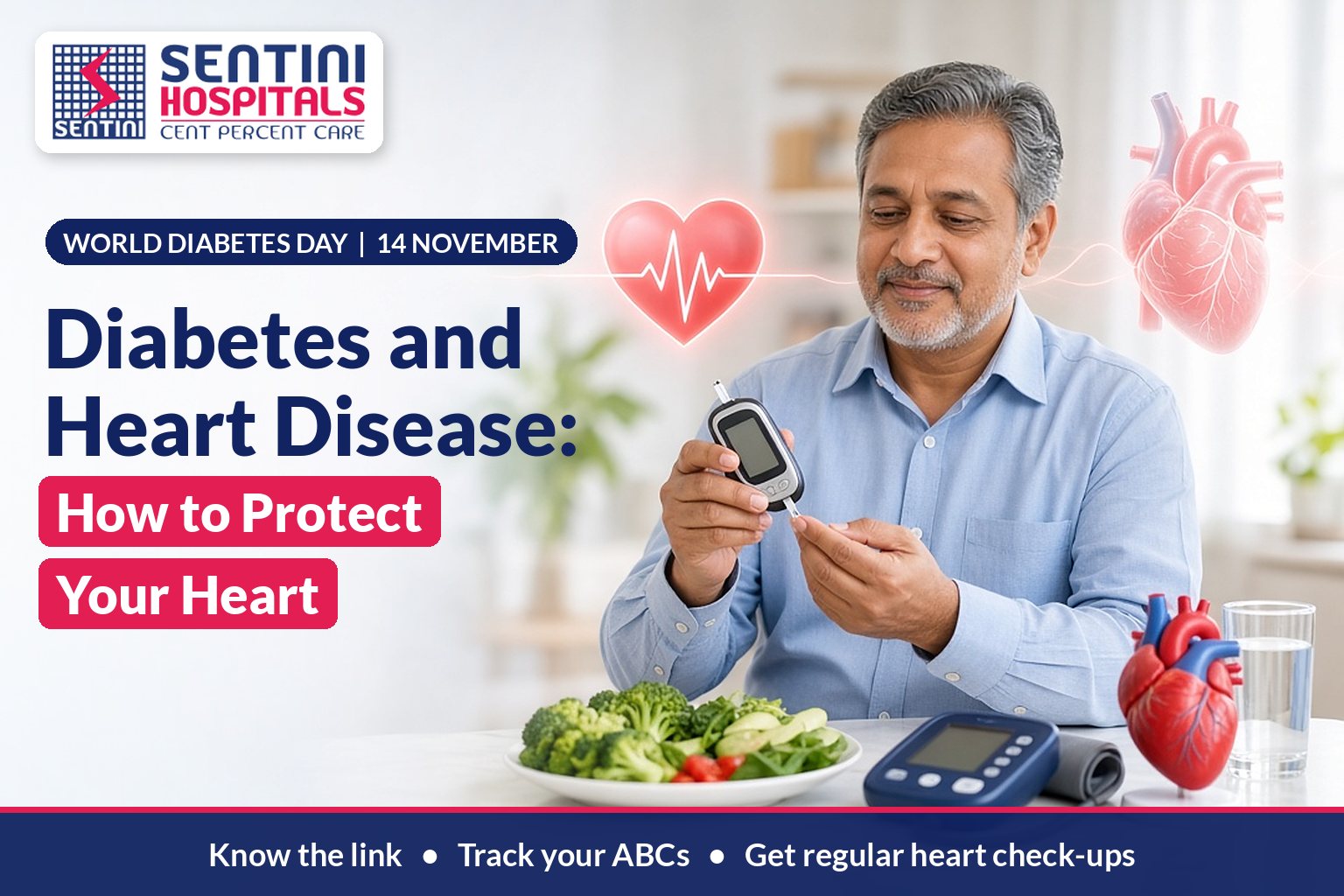
Diabetes and Heart Disease: How to Protect Your Heart, A Guide for Gudivada
Many families in Gudivada and across Krishna district know someone who checks their sugar every morning. What is less widely known is how closely diabetes and heart disease are linked. High blood sugar, over the years, quietly affects the blood vessels and nerves that keep the heart working. Ahead of World Diabetes Day on 14 November 2026, this guide explains the connection, the warning signs and the simple numbers worth checking.
Quick answer: Diabetes and heart disease are closely linked because high blood sugar damages blood vessels and the nerves that control the heart over time. People with diabetes are about twice as likely to develop heart disease, according to the US CDC. You can lower the risk by keeping your blood sugar (HbA1c), blood pressure and cholesterol in the target range your doctor sets, stopping tobacco, staying active, eating more vegetables and fewer processed foods, and having regular check-ups, including heart tests if your doctor advises them.
Why this matters for World Diabetes Day 2026
The theme for World Diabetes Day 2026 is "Early action on diabetes". The World Health Organization says more than 40% of people living with diabetes worldwide are undiagnosed, and that without a diagnosis they may not get the care they need (WHO: World Diabetes Day 2026).
WHO's diabetes fact sheet adds that the number of adults living with diabetes rose from 200 million in 1990 to 830 million in 2022, and that around 11% of cardiovascular deaths in 2021 were caused by high blood glucose (WHO: Diabetes fact sheet). In other words, protecting the heart is one of the main reasons to diagnose and manage diabetes early.
How diabetes affects the heart
Insulin is the hormone that helps sugar (glucose) move from the blood into the body's cells. In type 2 diabetes, the most common type, the body does not use insulin properly, so sugar builds up in the blood.
Over time, high blood sugar can lead to:
- Damage to the inner lining of arteries, making it easier for fatty plaque to build up (atherosclerosis)
- Narrowing of the coronary arteries, which supply the heart muscle, raising the risk of angina and heart attack
- Damage to the nerves that control the heart, which can change how symptoms are felt
- A higher risk of heart failure, where the heart cannot pump as well as it should
- Narrowed arteries in the legs (peripheral arterial disease) and in the brain, raising stroke risk
The CDC also notes that people with diabetes are more likely to have high blood pressure, high LDL cholesterol and high triglycerides, each of which adds to heart risk. The longer someone has diabetes, the higher the risk becomes.
Risk factors that add up
Diabetes rarely acts alone. The table below shows the common risk factors that combine with high blood sugar to affect the heart, and a practical first step for each.
| Risk factor | How it affects the heart | A practical first step |
|---|---|---|
| High blood sugar (HbA1c) | Damages blood vessels and nerves over time | Get an HbA1c test and agree a target with your doctor |
| High blood pressure | Increases strain on artery walls | Check BP regularly; take BP medicines as prescribed |
| High LDL cholesterol and triglycerides | Builds plaque in arteries | Get a lipid profile; cut fried snacks and sweets |
| Tobacco (smoking, beedi, gutka) | Damages arteries and makes blood more likely to clot | Stop tobacco; ask your doctor about support to quit |
| Excess weight around the waist | Linked to insulin resistance, high BP and cholesterol | Aim for gradual, steady weight loss |
| Physical inactivity | Raises sugar, BP and weight | Build up to 30 minutes of brisk walking on most days |
| Kidney disease | Linked to high BP and heart disease | Have kidney function and urine tests as advised |
| Stress and poor sleep | Can raise BP and affect sugar control | Keep a regular sleep routine; talk to someone you trust |
Symptoms to watch for
Signs of diabetes
According to WHO, common symptoms of diabetes include feeling very thirsty, passing urine more often than usual, blurred vision, tiredness and unintended weight loss. Type 2 diabetes can develop slowly, and symptoms may be mild for years. This is why a routine blood test matters.
Signs of a possible heart problem
Seek medical attention if you notice:
- Chest pain, pressure or tightness, which may spread to the arm, jaw, neck or back
- Breathlessness on walking or lying flat
- Unusual tiredness or weakness with routine activity
- Swelling of the feet or ankles
- A racing or irregular heartbeat
- Dizziness, fainting or sweating without a clear reason
Important for people with diabetes: because diabetes can affect the nerves that control the heart, heart symptoms may not always feel typical. If you have diabetes and feel unexplained breathlessness, sweating, nausea or discomfort in the chest or upper body, do not wait. Call 108 if symptoms are sudden or severe.
The ABCs: numbers worth knowing
The CDC suggests people with diabetes manage their "ABCs". These are simple to remember and can be checked at regular visits.
| Letter | What it means | What to discuss with your doctor |
|---|---|---|
| A | A1C (HbA1c), average blood sugar over 2 to 3 months | Your personal target range and how often to test |
| B | Blood pressure | The CDC suggests below 140/90 mm Hg for many people, or the target your doctor sets |
| C | Cholesterol | Your LDL cholesterol target and whether medicine is needed |
| s | Stop smoking | Support to stop all forms of tobacco |
Heart tests your doctor may suggest
Not everyone with diabetes needs every test. Your doctor will decide based on your age, how long you have had diabetes, symptoms and other risk factors. According to the CDC, tests may include:
- Electrocardiogram (ECG): records the heart's electrical activity
- Echocardiogram (echo): an ultrasound that shows how well the heart pumps and how thick the heart muscle is
- Exercise stress test (treadmill test): shows how the heart works when it is under strain
Blood tests such as HbA1c, fasting sugar, lipid profile and kidney function are also part of regular follow-up. Sentini Hospitals' Cardiology department describes the use of diagnostic tools to identify heart conditions, advice on risk factor changes, procedures such as angioplasty and stent placement, and support for cardiac rehabilitation. Laboratory testing is described on the Pathology page.
Everyday steps to protect your heart
Small, steady changes are easier to keep up than sudden ones. These steps are based on WHO and CDC guidance.
Food
- Fill half your plate with vegetables such as leafy greens, beans, gourds and brinjal.
- Keep rice portions moderate and include whole grains, millets or pulses where you can.
- Choose fewer fried snacks, sweets and sugary drinks, including sweetened tea and coffee.
- Use less salt, pickles and papad, which raise blood pressure.
- Drink water rather than soft drinks.
Activity
- Aim for brisk walking most days. Being active helps the body respond better to insulin.
- Break up long periods of sitting, for example by walking for a few minutes every hour.
- If you have heart symptoms or have been inactive for a long time, check with your doctor before starting.
Medicines and check-ups
- Take diabetes, blood pressure and cholesterol medicines exactly as prescribed, even when you feel well.
- Do not stop or change medicines on your own.
- Keep a small notebook of your sugar and BP readings to show your doctor.
- Have your feet, eyes and kidneys checked regularly, as diabetes affects them too.
- Get support to stop tobacco in all forms.
Early action for families in Gudivada
Early action does not only mean treatment. It means getting tested if you are over 30, overweight, have a family history of diabetes, or had diabetes during pregnancy. WHO notes that type 2 diabetes is often preventable, and that a healthy diet, regular physical activity, a healthy body weight and avoiding tobacco can prevent or delay it.
For residents of Gudivada and nearby towns in Krishna district, Sentini Hospitals is located on Ring Road, opposite Novotel Hotel, Vijayawada. If you have diabetes and would like to discuss your heart health, or you have symptoms such as breathlessness or chest discomfort, call +91 9010726666 or visit our contact page for directions. In an emergency, call 108.
Frequently Asked Questions
Does diabetes cause heart disease?
Diabetes increases the risk of heart disease. Over time, high blood sugar damages blood vessels and the nerves that control the heart. According to the CDC, people with diabetes are about twice as likely to have heart disease, and the risk rises the longer diabetes is present.
What is the link between diabetes and heart disease?
The link between diabetes and heart disease is mainly damage to blood vessels. High blood sugar, often along with high blood pressure and cholesterol, helps fatty plaque build up in the arteries, which can lead to heart attack, stroke and heart failure.
What heart tests should a person with diabetes have?
Your doctor may recommend an ECG, an echocardiogram or a treadmill stress test, depending on your age, symptoms and risk factors. Regular blood pressure checks and blood tests for HbA1c, cholesterol and kidney function are also important.
What blood pressure target is recommended for people with diabetes?
The CDC suggests keeping blood pressure below 140/90 mm Hg for many people with diabetes, or the target your doctor sets. Your doctor may advise a different target based on your health.
Can people with diabetes have a heart attack without chest pain?
Yes, it can happen. Diabetes can affect the nerves that control the heart, so symptoms may be unusual, such as breathlessness, sweating, nausea or tiredness. Seek medical help quickly if these appear suddenly.
Can heart disease be prevented if I have diabetes?
The risk can be lowered. Keeping your sugar, blood pressure and cholesterol in target, stopping tobacco, staying active, eating more vegetables and fewer processed foods, and taking medicines as prescribed all help protect the heart.
Medical disclaimer: This article is for general health education and does not replace advice from a qualified doctor. If you are unwell, please consult a doctor. Information is based on WHO and CDC guidance available on 27 October 2026.